
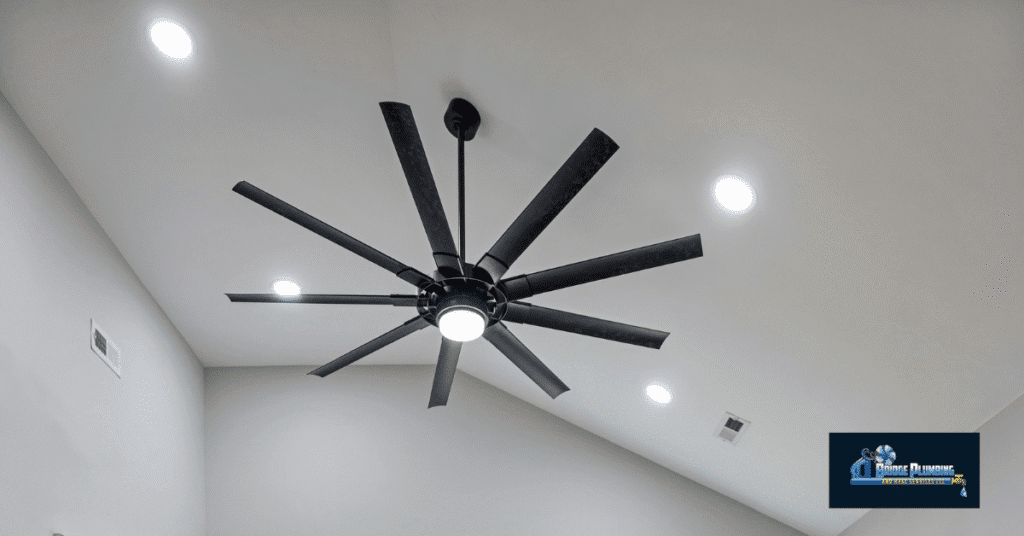
Most homeowners in Peoria run their ceiling fans all year long, but there’s a good chance yours is spinning the wrong way right now. That small switch on your fan’s motor housing can make a huge difference in how comfortable your home feels and how much you’re spending on energy bills. Getting the right ceiling fan direction for each season helps your HVAC system work better and keeps your family more comfortable.
Understanding which way should a ceiling fan turn matters more than most people realize. Whether you set your ceiling fan to spin counterclockwise in the summer or clockwise in the winter, the correct direction creates better airflow and energy savings. This guide will teach you the best ceiling fan direction settings, how to change the direction easily, and how ceiling fan direction for every season can reduce your energy bill while maximizing comfort.
At Bridge Plumbing & HVAC, we’ve helped Phoenix area families save energy and money on heating and cooling for over 25 years. One of the simplest ceiling fan tips we share is about fan direction. Most people have no idea their ceiling fan should spin different ways depending on winter or summer conditions.
How Does Ceiling Fan Direction Actually Work?
Your ceiling fan can spin two ways, and learning which way each rotation works is essential for comfort. Counterclockwise rotation pushes air straight down, creating that nice cool breeze you feel in summer. Clockwise rotation pulls air up and pushes it along the ceiling and down the walls, which helps spread warm air that collects near the ceiling around in winter.
The trick is knowing when to use each direction for summer and winter. Moving air doesn’t change the temperature, but it changes how that temperature feels on your skin. A ceiling fan can make you feel up to 8 degrees cooler even when the room temperature stays exactly the same. Understanding the direction of your ceiling fan and how the fan blade movement affects comfort is key to using a ceiling fan effectively.
The direction of your ceiling matters because hot air rises and cool air sinks. In winter, warm air from your furnace naturally rises and gets trapped near the ceiling. Running your ceiling fan in the right direction pushes that warm air back down. In summer, you want the opposite effect: a strong downward breeze that creates a cooling sensation through the wind-chill effect.
What Is the Ceiling Fan Direction in Summer?
When Peoria temperatures hit triple digits, your ceiling fan should rotate counterclockwise. This is the ceiling fan direction for summer that creates the best airflow. Stand under the fan and look up at your ceiling fan blades. If your ceiling fan is set right, you’ll feel air blowing down on you.
Here’s how to set your ceiling fan for summer cooling:
- Run fans counterclockwise at medium to high speeds
- You should feel a strong breeze and create a cooling breeze directly underneath
- Only run fans in rooms where people are actually sitting
- Turn off fans when you leave the room
- Pair ceiling fans with your AC, don’t use them as a replacement
This fan turn in the summer setup lets you raise your thermostat about 4 degrees without feeling any warmer. If you normally keep your AC at 72 degrees, you can bump it to 76 and still feel comfortable thanks to the cool breeze your ceiling fan creates. That small change can cut your cooling costs by 10 to 15 percent during Arizona’s brutal summer months, helping you save energy significantly.
Bridge Plumbing & HVAC recommends getting your AC serviced, cleaned, and maintained before summer hits. Ceiling fans help optimize your cooling, but they can’t do the job alone when it’s 110 degrees outside. Our technicians make sure your air conditioning system is ready to handle whatever Arizona weather throws at it through professional installation, repair, and maintenance services.
What Is the Right Ceiling Fan Direction for Winter?
Arizona winters are mild, but we still need heat on those chilly desert nights. When you’re running your furnace, flip that ceiling fan switch and run your ceiling fan clockwise in the winter. This is the winter ceiling fan direction that provides the best airflow and energy savings.
The fan pulls cool air up from the floor and pushes warm air down from the ceiling where it collects. You won’t feel much of a breeze, which is exactly what you want. The air movement is gentle and indirect, which is why setting your fan to spin clockwise at a low speed works best.
Follow these rules for winter ceiling fan operation:
- Always run ceiling fans clockwise during heating season
- Keep the speed on low (high speeds will make you feel cold)
- The goal is subtle air circulation, not a noticeable breeze
- This winter for the best airflow approach works especially well in rooms with high ceilings
- Combine with your furnace for better heat distribution
Running your ceiling fan in winter correctly can reduce heating costs by 10 to 15 percent. Warm air rises and gets trapped at the ceiling, and your fan in the winter brings it back down where you actually need it. The correct fan direction for winter maximizes efficiency.
Before winter arrives, schedule furnace maintenance, cleaning, and repair with Bridge Plumbing & HVAC. We’ll check your heating system and make sure everything is working safely and efficiently. A well-maintained furnace plus proper fan direction in the winter gives you the best heating results.
How Do I Change the Ceiling Fan Direction?
Switching directions takes about 30 seconds once you know where to look. Safety is important though, so follow these steps carefully when you change the ceiling fan direction.
Step-by-step to change your ceiling fan direction:
- Turn off the ceiling fan completely using the wall switch
- Wait until the fan blades stop moving (never touch moving blades)
- Look at the motor housing where blades attach to the ceiling
- Find the small slide switch on the side of the motor (this is your ceiling fan switch)
- Flip the switch to the opposite position
- Turn the fan back on at low speed and check the airflow
Stand directly under the fan to test it. When you turn in the summer setting, you should feel air blowing straight down at you. Winter direction should feel like barely any air movement at all. If you have fans in multiple rooms, adjusting your ceiling fans in all of them when the seasons switch ensures consistent comfort throughout your home.
Check if your fan is spinning the right way by standing beneath it. If the fan is spinning counterclockwise in summer, you’ll feel that cool breeze immediately. If your ceiling fan should be spinning clockwise in winter but isn’t, you won’t get the heat distribution benefits you need.
Why Does the Direction in Summer and Winter Matter?
The direction for summer and winter makes a significant difference in both comfort and energy costs. Understanding the direction a ceiling fan should rotate helps you optimize your HVAC system’s performance. A ceiling fan can help reduce your heating and cooling bills by 10-15% when set correctly.
In summer, when your ceiling fan should rotate counterclockwise, the downward airflow creates a wind-chill effect. This is why using a ceiling fan allows you to raise your thermostat setting without sacrificing comfort. The breeze doesn’t actually cool the air, but a fan can make you feel cooler through evaporative cooling on your skin.
In winter, reversing the ceiling fan to rotate clockwise at a low speed redistributes warm air. Heat naturally rises, so without proper circulation, the warmest air sits uselessly near your ceiling while you feel cold at floor level. The gentle updraft from a winter ceiling fan direction pushes that warm air back down the walls and into your living space.
Setting the direction correctly is one of the simplest ceiling fan tips for maximizing best airflow and energy savings. When your fan turns the right way for the season, it works with your HVAC system instead of against it.
What Are Common Mistakes with Ceiling Fan Direction?
Even good ceiling fans won’t help if you’re using them wrong. Running fans in empty rooms is the biggest mistake we see at Bridge Plumbing & HVAC. Fans cool people, not rooms, so they’re just wasting electricity when nobody’s there. A ceiling fan help is limited to occupied spaces.
Wrong seasonal direction is another common problem. A fan that’s spinning the wrong way actually fights against your heating or cooling system instead of helping it. We see many homeowners who never learn which way their ceiling fan should turn, leaving them running inefficiently year-round.
Some homeowners also try to use ceiling fans as a substitute for AC or heating, which doesn’t work during extreme temperatures. While a ceiling fan can make your space more comfortable, it cannot change the actual air temperature. You still need properly functioning HVAC equipment.
Other common ceiling fan mistakes include:
- Dusty fan blades that reduce airflow and make the motor work harder
- Not adjusting your ceiling fan speeds appropriately for the season
- Failing to set your ceiling fan direction when seasons change
- Ignoring wobbling or unusual noises that indicate problems
- Running fans on high speed in winter when low speed is correct
Clean your ceiling fan blades a few times per year for best performance. If your ceiling fan wobbles badly or makes weird noises, something might be loose or damaged. Turn the fan off and call a professional for inspection and repair.
How Can I Tell If My Fan Is Going the Right Way?
The easiest way to check if your fan is spinning correctly is the direct observation test. Stand directly under the fan while it’s running and look up. Pay attention to the direction of the fan blades as they rotate and what you feel.
For summer (counterclockwise direction):
- The leading edge of each fan blade should move from your right to left
- You should feel strong air blowing down on you
- There should be a noticeable cool breeze effect
- The ceiling fan blades create direct downward airflow
For winter (clockwise direction):
- The leading edge of each fan blade should move from your left to right
- You should feel minimal to no direct breeze
- Air movement should be subtle and indirect
- The fan is going the right way when warm air gently redistributes
If the fan and look test doesn’t give you clear results, try the paper test. Hold a tissue or light piece of paper below the fan. In summer mode, it should blow upward toward the ceiling. In winter mode, it should barely move or be pulled gently upward.
When Should I Change the Direction of My Ceiling Fan?
You should change the ceiling fan direction twice per year as seasons transition. The best times to adjust your ceiling settings are:
Spring to Summer Transition (April/May):
- Set all ceiling fans to spin counterclockwise
- This prepares your home for the cooling season
- Make this change before temperatures consistently reach the high 80s or 90s
Fall to Winter Transition (October/November):
- Change the direction to clockwise rotation
- This optimizes heating efficiency as temperatures drop
- Make the switch when you start using your heating system regularly
Set your fan direction as part of your seasonal home maintenance routine. When you schedule HVAC maintenance, cleaning, and system checks with Bridge Plumbing & HVAC, remind yourself to also change your ceiling fan’s direction. Many homeowners set calendar reminders or do it when they change their smoke detector batteries.
The direction to move your fan depends entirely on whether you need cooling or heating assistance. Don’t wait until you’re uncomfortable to make the change. Be proactive about setting the direction your ceiling fan rotates for maximum efficiency.
What Other Ceiling Fan Tips Help Save Energy?
Beyond getting the fan direction right, several other strategies optimize your ceiling fan performance and help you save energy:
Fan Speed Matters:
- Summer: Medium to high speeds create the best cooling effect
- Winter: Always use low speed to avoid creating a cold breeze
- Match fan speed to your comfort needs and room size
Strategic Fan Use:
- Only run ceiling fans in occupied rooms
- Turn the fan off when leaving a space for more than a few minutes
- Remember that a ceiling fan help is limited to when people are present
HVAC Coordination:
- Adjust your thermostat up in summer when using fans (4-5 degrees)
- Lower your thermostat slightly in winter with proper fan circulation
- This approach reduces strain on your heating and cooling systems
Regular Maintenance:
- Clean fan blades quarterly to maintain airflow efficiency
- Tighten any loose screws or parts that cause wobbling
- Schedule professional inspection if you notice unusual sounds
Room Considerations:
- Larger rooms benefit more from ceiling fan use
- Rooms with high ceilings see the greatest winter heating benefits
- Proper ceiling fan size for your room improves effectiveness
When you optimize your ceiling fan use in combination with well-maintained HVAC equipment, you maximize comfort and minimize energy costs. Bridge Plumbing & HVAC offers comprehensive maintenance plans that include checking your entire home comfort system, from furnace and AC service to recommendations on ceiling fan usage patterns.
When Should I Call a Professional About My Ceiling Fan?
Changing fan direction is easy, but some situations need expert attention. Grinding sounds, burning smells, or visible sparks mean you should turn off the ceiling fan at the breaker and call Bridge Plumbing & HVAC right away.
Professional help makes sense for:
Installation Needs:
- Installing new ceiling fans requires electrical expertise
- Proper mounting ensures safety and prevents future problems
- Professional installation guarantees correct wiring and balance
Electrical Issues:
- Flickering lights when the fan runs
- The ceiling fan switch doesn’t work properly
- Intermittent operation or complete failure to start
- Any burning smell or unusual heating of the motor
Mechanical Problems:
- Severe wobbling that doesn’t improve with blade cleaning or tightening
- Loud grinding, clicking, or rattling noises
- The fan to turn doesn’t respond to direction switch changes
- Fan blades that show signs of damage or warping
Safety Concerns:
- Ceiling fans in high or vaulted ceiling installations
- Outdoor ceiling fans exposed to weather elements
- Fans that show any signs of falling or loose mounting
We serve homes and businesses throughout Peoria and the Phoenix area with honest pricing and reliable service for ceiling fan installation, repair, cleaning, and maintenance. Our team is available 24/7 for emergencies.
How Do Ceiling Fans Work With My HVAC System?
Ceiling fans work best when paired with good HVAC equipment and proper maintenance. The key is understanding that fans don’t heat or cool air; they simply move it to create comfort through improved circulation and wind-chill effects.
During summer, set your thermostat a bit higher and let ceiling fans handle the difference. The breeze from your ceiling fan allows you to maintain comfort at 76-78 degrees instead of 72-73 degrees. This reduced AC runtime means lower energy costs and less wear on your air conditioning system.
In winter, you can lower the thermostat slightly and use fans to spread the heat around. When your ceiling fan to rotate clockwise redistributes warm air from the ceiling back down to living spaces, your furnace doesn’t need to cycle on as frequently. This extends equipment life and reduces heating costs.
This coordinated approach creates best airflow and energy savings:
- Your HVAC equipment runs less frequently
- You experience more consistent temperatures throughout rooms
- Equipment lifespan increases with reduced runtime
- Monthly energy bills decrease significantly
- Overall comfort improves with better air circulation
Bridge Plumbing & HVAC offers maintenance plans that keep your HVAC system running well year-round. Regular service catches small problems before they turn into expensive repairs. We’ve been taking care of Phoenix area families for over 25 years because we show up when we say we will and fix things right the first time with quality installation, repair, cleaning, and maintenance work.
Take Action on Your Ceiling Fan Direction Today
Walk through your house right now and check which direction your ceiling fans are spinning. Make the switch if needed based on the current season. Set yourself a reminder for spring and fall to adjust them again and optimize your ceiling fan performance year-round.
The correct direction makes a real difference. When you set your ceiling fan direction properly, you’ll notice improved comfort and lower energy bills almost immediately. This simple adjustment takes less than a minute per fan but delivers benefits every single day.
Good ceiling fans help, but they’re just one piece of home comfort. If you’re dealing with high energy bills, rooms that won’t stay comfortable, or HVAC equipment that’s not working right, give us a call. Bridge Plumbing & HVAC handles everything from AC repair and furnace service to water heater replacement, emergency plumbing, and ceiling fan installation.
Our experienced technicians provide fast, dependable service when you need it most. Whether it’s scheduled maintenance, cleaning, repair, or a middle-of-the-night emergency, we’re here to help keep your Peoria home comfortable all year long. Contact Bridge Plumbing & HVAC today and let’s make sure your home comfort systems are working as efficiently as possible.