If you’ve spent any time researching water treatment options, you’ve probably felt overwhelmed. Water filtration, reverse osmosis, carbon filters, membranes – the terminology alone is enough to make your head spin. Here’s the truth: these systems use different methods and solve different problems when it comes to water quality and drinking water safety.
Water Filtration vs Reverse Osmosis in Peoria Homes
Understanding the difference between water filtration and reverse osmosis matters for Peoria homeowners dealing with Arizona’s mineral-heavy water supply. Whether you need a simple water filter or a complete reverse osmosis system depends on your specific water quality needs and what contaminants are present in your water. This guide cuts through the confusion about filtration vs reverse osmosis to help you make an informed decision about treating your home water.
At Bridge Plumbing & HVAC, we’ve installed hundreds of water filtration and reverse osmosis systems across Peoria and Phoenix over 25 years. We’ll explain how each water treatment system works, what each can remove from your water, and which option actually makes sense for your home’s drinking water quality.
What Water Filtration Really Does
Water filtration removes impurities using physical barriers or chemical processes. Think of it as a sophisticated strainer that catches what you don’t want while letting clean water pass through. A filtration system works by trapping contaminants as water passes through various filtration media.
Most water filtration systems use one or more of these methods:
- Carbon filters with activated carbon absorb chlorine, chemicals, and compounds that make water taste or smell bad
- Sediment filters trap visible particles like sand, rust, and dirt before they reach your pipes
- Ceramic filters catch bacteria and sediment through tiny pores
- UV filters kill bacteria and viruses using ultraviolet light
- Multi-media systems combine several filtration methods for comprehensive treatment
The main thing to understand about standard filtration is what it doesn’t remove. These filter systems typically leave dissolved minerals in your water. That means calcium, magnesium, and total dissolved solids pass right through. For some contaminants like heavy metals or fluoride, you’ll need something stronger to purify your water effectively.
A basic water filter or whole house filtration system excels at improving taste, removing chlorine from municipal water, and catching sediment and carbon particles. The filtered water tastes better and protects your plumbing, but the filtration method has limits on what contaminants it can remove.
How Reverse Osmosis Takes It Further
Reverse osmosis isn’t just another type of water filter. It’s a complete water purification system that removes contaminants at the molecular level. The reverse osmosis process forces water through a semi-permeable membrane so fine that only water molecules can squeeze through. Almost everything else gets flushed away as contaminated water waste.
Reverse osmosis uses a semi-permeable membrane as its core technology. The osmosis uses a semi-permeable membrane to block contaminants while allowing pure water molecules to pass through. This reverse osmosis membrane operates under water pressure to separate clean drinking water from impurities.
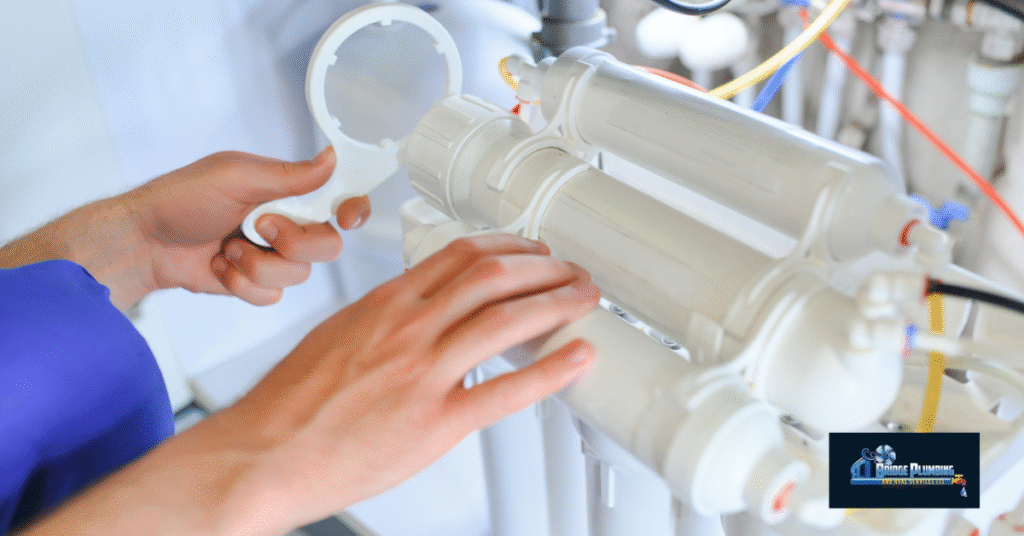
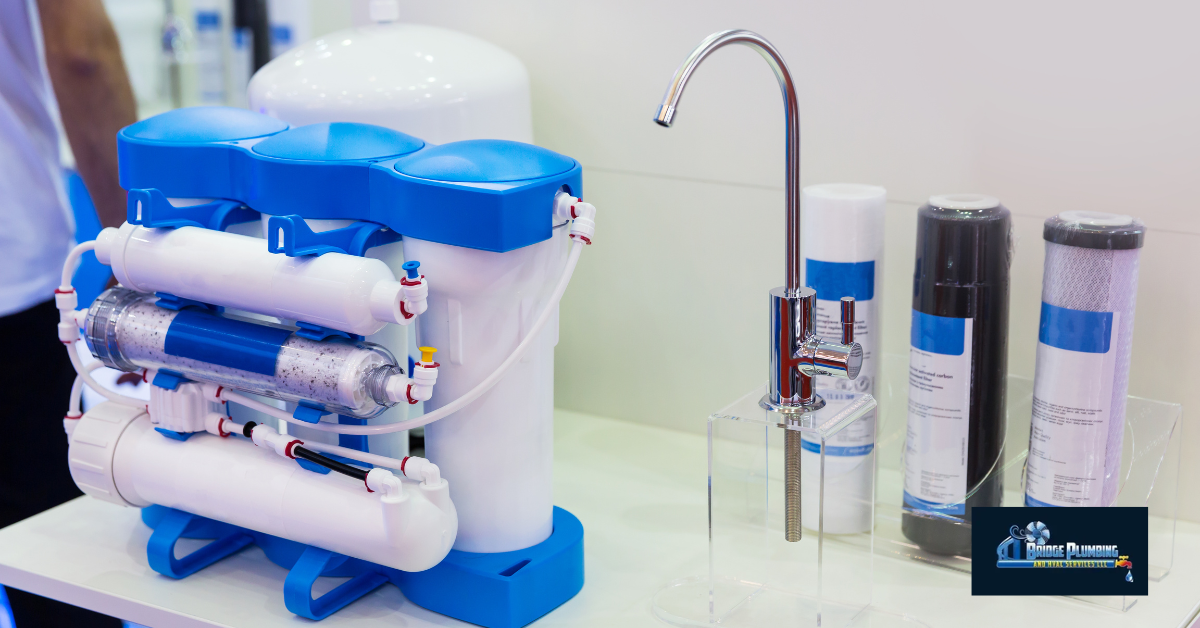
A typical RO system from Bridge Plumbing & HVAC includes several stages. First, pre-filters (usually a sediment filter and carbon filter) remove larger particles and chlorine. Then water using high pressure moves through the RO membrane, leaving up to 99% of contaminants behind. Finally, a post-filter polishes the water before it goes into a storage tank. This multi-stage approach is why reverse osmosis filtration systems deliver the highest quality water.
What makes reverse osmosis powerful is its ability to remove things standard water filters miss:
- Heavy metals like lead, mercury, and arsenic
- Fluoride and nitrates
- Pharmaceutical residues
- Microplastics
- Salt and sodium dissolved in water
- Bacteria and viruses
- Total dissolved solids (TDS)
- Minerals from the water that cause hardness
Reverse osmosis water is among the purest types of water available for home use, often cleaner than bottled water. The RO water produced rivals or exceeds drinking water quality standards.
The Real Differences That Matter Between Filtration and Reverse Osmosis
Let’s talk about what actually affects your daily life and wallet when comparing water filters and reverse osmosis systems.
Water Waste and Efficiency
Water waste is the big one. Standard filtration produces virtually no wastewater. Every gallon in comes out filtered. Reverse osmosis systems need wastewater to flush away contaminants – typically 3 to 4 gallons of waste for every gallon of purified water produced. In our desert climate, that’s worth considering. However, modern reverse osmosis units have improved efficiency compared to older models.
Installation and Complexity
Installation complexity varies significantly. Basic filtration systems are straightforward to install, and some homeowners handle it themselves. Reverse osmosis filtration systems need professional installation because you’re dealing with multiple components, a storage tank, drain connections, and often a dedicated faucet for RO water.
Bridge Plumbing & HVAC handles these installations, repairs, and maintenance regularly throughout Peoria. We’ve learned that proper setup and cleaning of all components prevents headaches down the road. Whether installing whole-house water filtration or point-of-use reverse osmosis, professional work matters.
Flow Rate and Convenience
Flow rate affects convenience. Turn on a tap with standard filtration, and you get immediate flow at full water pressure. RO systems work slower because the membrane process takes time and water pressure plays a critical role. That’s why reverse osmosis filtration systems include storage tanks holding 2 to 4 gallons of purified water. Once the tank refills, you’re good to go, but drain it and you’ll wait.
Cost Comparison
Cost tells an important story too when looking at reverse osmosis vs standard filtration. Basic water filtration systems start around $150 to $500 for under-sink units, while whole-house water filtration runs $1,000 to $4,000 installed. Quality reverse osmosis systems typically cost $1,500 to $3,000 professionally installed.
Maintenance runs $50 to $150 yearly for filtration with simple filter changes, versus $100 to $300 for reverse osmosis systems with their multiple filter replacements including sediment, carbon, and membrane components. The three filter stages in most RO units require periodic replacement to maintain water quality.
Which Water System Fits Your Situation
Here’s where it gets personal. Your neighbor’s perfect solution might be completely wrong for your home water needs.
Choose standard filtration when your main gripes are taste, odor, or that chlorine smell from tap water. If you want to protect appliances from sediment throughout your whole house, a filtration system might be your answer. Budget-conscious homeowners often start here because it solves common problems without breaking the bank. Activated carbon filters excel at removing chlorine and organic compounds that affect taste.
Go with reverse osmosis if a water test shows specific nasties like arsenic, lead, or high total dissolved solids. When you test their water, many Peoria residents discover contaminants that only reverse osmosis can adequately remove. Health concerns requiring ultra-pure drinking water point toward RO. You’re making a bigger investment, but you’re getting near-total purification of contaminants from water.
A water filtration system removes many common impurities, but when you need to remove the widest number of contaminants in water, reverse osmosis is used as the gold standard. Systems designed for maximum contaminant removal rely on the reverse osmosis process.
What Peoria Water Brings to the Table
Living in Peoria means dealing with hard water loaded with dissolved minerals. Your dishwasher shows it with those cloudy spots. Your showerhead proves it with scale buildup. Water hardness isn’t dangerous, but it’s annoying and expensive for appliances.
Many of our Bridge Plumbing & HVAC customers use a combination approach that works brilliantly. Install a whole-house water softener to tackle hardness and produce soft water throughout your home, then add either a water filter or reverse osmosis system at the kitchen sink for drinking water. Water softening handles the minerals, while filtration or RO provides clean drinking water. You get protected pipes and appliances throughout your home, plus great-tasting filtered drinking water where it counts.
The reality is that Arizona water presents unique challenges. Water that contains high mineral content requires water softening, but that doesn’t address other contaminants. Testing your specific water supply tells you what you’re actually dealing with rather than guessing based on what your neighbor has. Understanding your water vs the general area water quality helps you make the right choice.
Understanding What Each System Can Remove
When comparing water filters and reverse osmosis capabilities, knowing what each can remove matters for your drinking water quality decision.
What Standard Filtration Removes:
- Chlorine and chloramines (with activated carbon)
- Sediment, rust, and visible particles (with sediment filter)
- Some pesticides and herbicides (with carbon filtration)
- Volatile organic compounds (VOCs)
- Bad taste and odor
- Some bacteria (with certain filter types)
What Reverse Osmosis Removes:
- Everything listed above, plus:
- Heavy metals like lead, mercury, arsenic, and copper
- Fluoride and nitrates
- Total dissolved solids (TDS)
- Sodium and salt
- Pharmaceutical residues
- Microplastics
- Viruses and bacteria (99%+ removal)
- Radioactive elements
- Nearly all dissolved contaminants removed from the water
The reverse osmosis membrane is the key difference. While activated carbon to remove chlorine and sediment filters catch particles, only the semi-permeable membrane in reverse osmosis units can block dissolved contaminants at the molecular level to produce quality water.
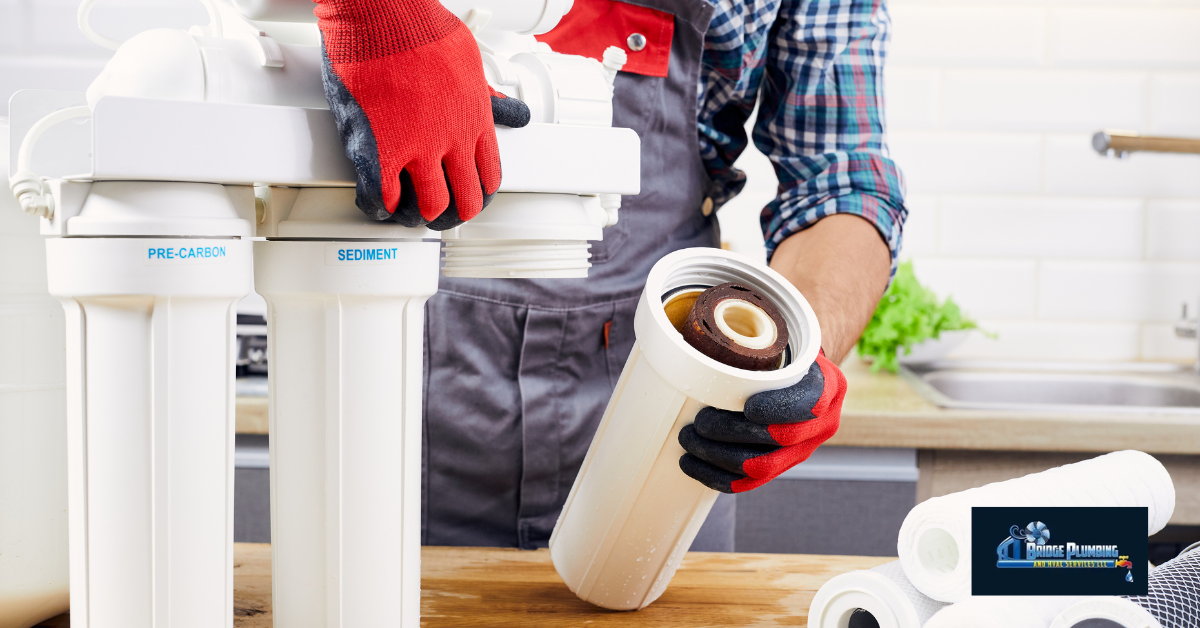
Why Installation, Repair, and Maintenance Quality Actually Matters
You can buy a water system online and try installing it yourself. Some people do. But we’ve fixed enough DIY disasters at Bridge Plumbing & HVAC to know that professional installation, repair, and ongoing maintenance pays for itself.
Leaks from improper connections, inadequate water pressure causing slow flow, drain lines that back up – these problems show up months later and cost more to fix than professional installation would’ve cost upfront. Our technicians have installed hundreds of water treatment systems across Peoria and Phoenix. We know the local water supply conditions, building codes, and what actually works in Arizona homes.
With over 25 years of experience, we also provide water quality testing so you’re not guessing about which water treatment system you need. We’ll explain your options honestly about filtration vs reverse osmosis, install everything correctly with proper filter and membrane placement, and handle ongoing maintenance when filter changes are needed. Our 24/7 availability means you’re covered if something goes wrong, though proper installation, cleaning, and repair usually prevents problems.
Whether you use reverse osmosis or standard filtration, regular maintenance keeps your water purification system delivering clean water. Neglected filters and membranes allow contaminants to pass through, defeating the purpose of having a water treatment system at all.
Making Your Call on Filtration vs Reverse Osmosis
The water filtration vs reverse osmosis question doesn’t have a one-size-fits-all answer. What’s in your water matters more than marketing hype or what worked for someone else.
Start with testing. You can’t make a smart decision without knowing your contaminant levels and water quality needs. Many issues get solved with standard water filtration systems, saving you money and water waste. But if testing reveals serious contaminants, reverse osmosis stops being optional and becomes necessary to treat your water properly.
Think about your household’s drinking water usage and whether you need filtered drinking water at one location or whole-house coverage. Consider your budget for both installation and ongoing filter replacements. Decide whether a simple carbon filter handles your needs or if you need the comprehensive contaminant removal only a reverse osmosis system provides.
The reverse osmosis vs standard filtration debate comes down to your specific water that contains whatever contaminants your test reveals. Some homes need only basic filtration to improve taste and remove chlorine. Others dealing with hard water benefit from water softening combined with either option. Still others with serious contaminants require reverse osmosis water filtration systems for safety.
Bridge Plumbing & HVAC has helped countless Peoria families figure this out. We test your water, explain what makes sense for your situation, and install the right water system without pressure tactics or upselling. Good water quality shouldn’t be complicated or confusing.
The Combination Approach for Arizona Homes
Many Peoria homeowners find that using both water softening and either filtration or reverse osmosis creates the ideal home water solution. Here’s how this combination works:
Whole-House Water Softener:
- Removes calcium and magnesium that cause hard water
- Produces soft water for bathing, laundry, and appliances
- Prevents scale buildup in pipes and water heaters
- Extends appliance life and reduces cleaning time
Plus Point-of-Use Filtration or RO:
- Provides clean drinking water at kitchen sink
- Removes contaminants the softener doesn’t address
- Delivers great-tasting water for cooking and beverages
- Ensures highest quality water for consumption
This systems approach addresses both water hardness and drinking water quality. The water softener handles the dissolved minerals throughout your home, while your chosen filtration method ensures pure water for drinking. It’s the best of both worlds for Arizona’s challenging water supply.
Ready to Stop Wondering and Start Enjoying Better Water?
You now understand how water filtration and reverse osmosis work, what each system can remove, and the key differences between them. The next step is finding out what’s actually in your home water so you can make an informed choice.
Contact Bridge Plumbing & HVAC today. We’ll test your water, walk you through your options for filtration and reverse osmosis, and install a water treatment system that actually solves your specific problems. Whether you need a simple water filter, a comprehensive reverse osmosis system, or a combination including water softening, we provide professional installation, repair, cleaning, and maintenance backed by over 25 years of experience.
Clean, great-tasting, safe drinking water is closer than you think. Let our expert technicians help you choose between filtration vs reverse osmosis and install the right solution for your Peoria home.